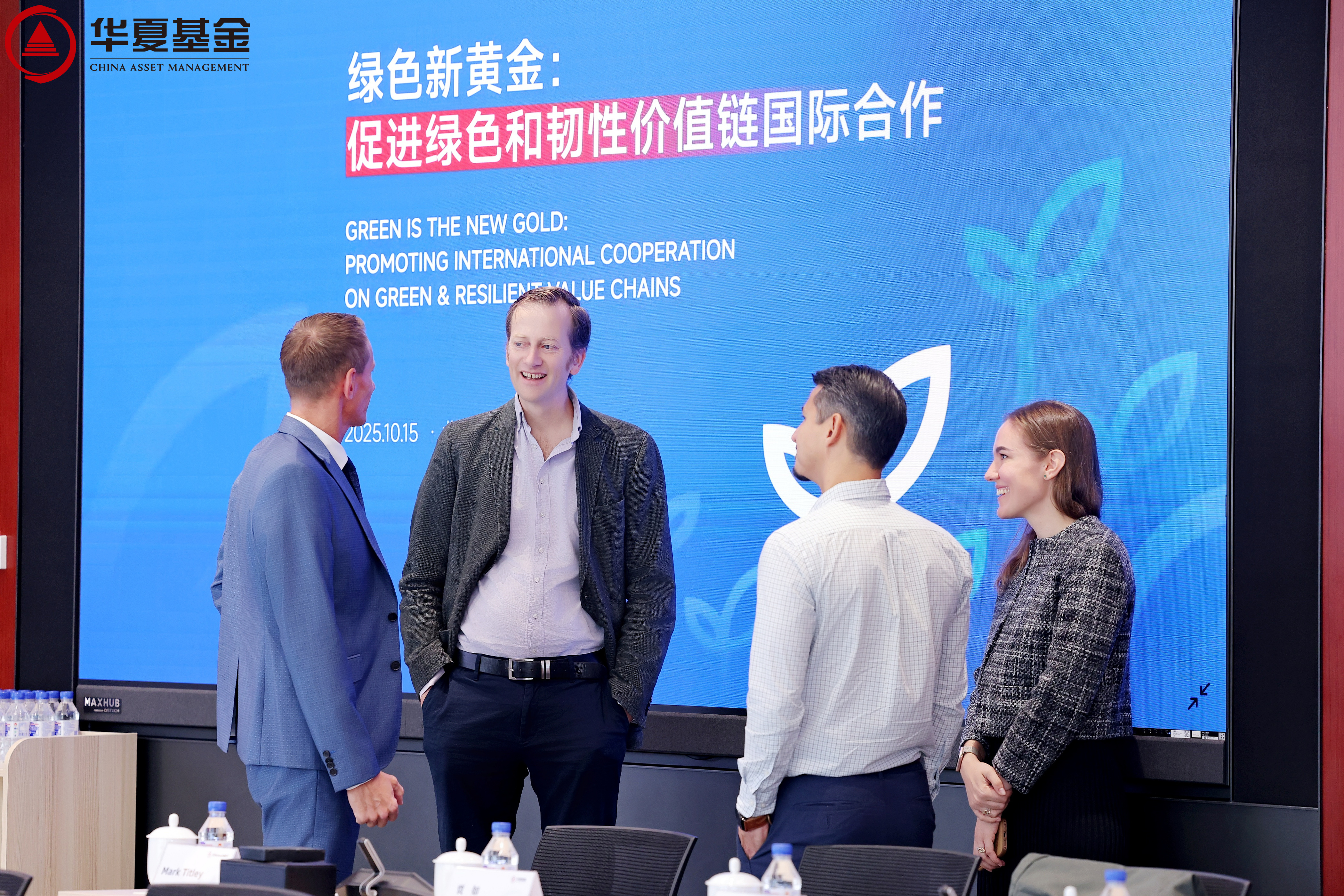
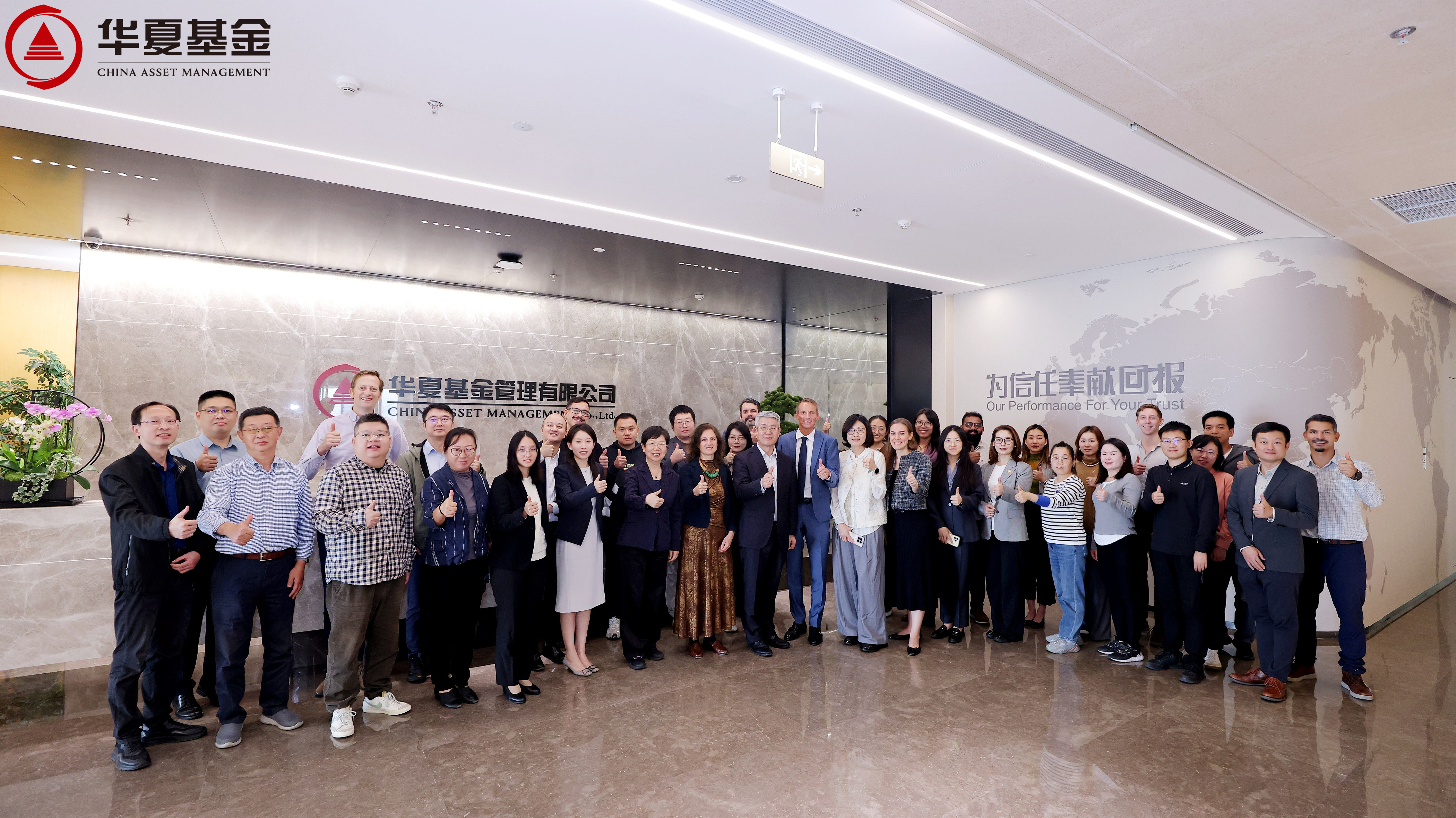
On October 15, China Asset Management Co., Ltd. (ChinaAMC) convened a symposium titled "Green is the new Gold: Fostering International Cooperation on Green and Resilient Value Chains", in an effort to promote international collaboration in building sustainable and resilient value chains.
The event, held at ChinaAMC's Beijing headquarters, brought together distinguished Chinese and international participants. These included Mr. Christoffer Gronstad, Special Advisor to the China Council for International Cooperation on Environment and Development, and representative of the Norwegian Government; Ms.Tong Xiaolei from the EU Delegation to China; Mr. Zhang Jianping from Chinese Academy of International Trade and Economic Cooperation (CAITEC), Commerce Ministry; Ms. Jin Hongman, former Deputy Director-General of the General Administration of Customs; and Mr. Qian Zhaohui from the Foreign Environmental Cooperation Office of Ministry of Ecology and Environment. The symposium was co-organized by ChinaAMC and BellaTerra Consulting.
Against the backdrop of the upcoming EU Deforestation Regulation (EUDR), and as China is pushing forward its dual-carbon goals and Biodiversity Strategy (2023-2030), businesses face a complex landscape of challenges as well as unprecedented opportunities. This symposium served as a platform for stakeholders from government, non-governmental organizations, think tanks, trade groups, and companies across China, Europe and Brazil. Ms.Nicole Polsterer from Fern shared the status quo of EUDR, and afterwards the meeting delved into discussions on topics including its implications for Chinese exporters and pathways to compliance; industry trends and best practices; and developments in green finance and investment.
In his welcome address, Mr. Richard Pan, Managing Director and Chairman of the ESG Committee of ChinaAMC, highlighted that deforestation and natural ecosystem degradation are primarily driven by agricultural expansion. "According to the UN Food and Agriculture Organization, agriculture accounts for approximately 75% of global deforestation. Data from the World Resources Institute indicates the world lost 6.7 million hectares of tropical primary forest in 2024, equivalent to 18 football fields per minute," Mr. Pan said.
He further noted that the production of timber, soy, palm oil, coffee, cocoa, and rubber is causing significant damage to primary rainforests. For companies involved, managing deforestation risks within their supply chains is not merely an external requirement but a fundamental necessity for achieving sustainable development and building long-term competitive advantage.
"Biodiversity conservation and zero deforestation are critical priorities for us," Mr. Pan emphasized. "We place significant importance on related corporate practices within our investments. As a leading asset manager, we are committed to helping companies build capacity, seize the opportunities brought by sustainability, and drive their supply chains towards greater sustainability, transparency, and traceability."

 close
close
 About ChinaAMC